Archives

AH 2001: Medical Terminology

Language of Medicine - Speak like a Medical Professional

Two Credits

Prerequisites: High School Biology with a grade of C or higher

This is a two week course. The first week will be delivered in a distance learning model where instruction will be synchronously at the times for which the class is scheduled. The first week of the distance learning class will be held on Monday through Friday from 3pm-7pm EST. Pending the Winter Weather and delay on the academic year at high schools, this time may change to an afternoon slot. We will notify enrolled students of any schedule changes. Students will then check in on June 23rd for the residential aspect of the program.

This Medical Terminology course provides an introduction to and mastery of medical terminology through presentation of word roots, prefixes and suffixes. It provides meanings for these medical terms in the context of the structure and function of the human body. Emphasis will be to build a working medical vocabulary based on body systems. This course will study the location, functions and terminology of the organs of the various systems of the body.

Student will be able to identify the structures and describe the functions of the body systems. *Explore the language of the body and medicine through lecture, hands-on and real-world medical scenarios. Practice the language and terms that healthcare professionals use daily.

UConn Pre-College Summer: Allied Health Medical Terminology

Sessions Offered

Distance Learning & Session 1:

June 13, 2027 - June 27, 2026


Format

Credit Bearing

This class is meant to be immersive and students will:

  1. Be able to demonstrate the word analysis skills needed to define unfamiliar medical terms when they are encountered by breaking down terms into their combining forms, prefixes and suffixes
  2. Be able to explain the meanings of medical terms in the context of the structure and function of the human body in health and disease.
  3. Be able to name the organs of the various body systems and describe their locations and functions
  4. Be able to describe disease processes; symptoms, diagnoses and treatments that affect the various body systems.
  5. Be able to transfer the specialized medical vocabulary and abbreviations needed (written and aural) to clinical scenarios

Related Careers:

  • Clinical Laboratory Technologist
  • Genetic Counselling
  • Occupational and Environmental Health and Safety
  • Healthcare Administration/Business

UConn Pre-College Summer: Allied Health Medical Terminology

UConn Pre-College Summer: Allied Health Medical Terminology

UConn Pre-College Summer: Allied Health Medical Terminology

Meet the Professor


Mary Turano

UConn Early College Experience (ECE) Allied Health Instructor

Mary has been a teacher for 17 years and loves SCIENCE and MEDICINE. In addition to being a UConn ECE certified teacher, Mary is licensed and practicing EMT and EMS-I (EMT Instructor) so she brings experiences and clinical practices into the classroom to help you learn about the language of medicine. Mary loves teaching through hands-on activities within her class and will be bringing in models, manikins and other materials to help you get immersed within the human body. Mary is married and has three amazing daughters (25, 21, and 19) all of them are in the biological, chemical and medical fields.


UConn Pre-College Summer: Allied Health Medical Terminology Mary Turano

CHEM: 1194: The Science of Chemistry

An intensive enrichment program designed to foster interest, confidence, & achievement in chemistry

1 Credit

Prerequisite: Completed High School Chemistry

This Courses is designed to foster interest, confidence, and achievement in chemistry, particularly among students from underserved schools. By providing an inclusive, hands-on environment, the program bridges the gap between high school and college-level STEM experiences, exposing students to advanced concepts in chemistry, guided laboratory experiments, and problem-solving exercises beyond standard curricula. The course will focus on mentorship and learning through experience. Students will take part in workshops, lab activities, and discussions that help them better understand advanced chemistry topics and gain hands-on experience. Instructors will work closely with small groups of students, encouraging their interest and persistence in science careers.

Sessions Offered

Session 1:

June 20, 2027 - June 26- 2027


Format

Residential

Credit Bearing

This class is meant to be immersive and students will:

1. Engage in hands-on chemistry experiments

2. Strengthen core chemistry knowledge and skills to engage with rigorous laboratory work.

3. Develop experimental design and data analysis skills.

4.  Increase students' interest and self-efficacy in pursuing advanced STEM studies and careers in STEM.

5.  Leave with mentors at UConn that will support your continued interest in the field of Chemistry.

Related Careers:

  • Analytical & Research Chemist
  • Chemical Engineer
  • Laboratory Technician
  • Quality Management Assistant

UConn Pre-College Summer: Allied Health Medical Terminology

UConn Pre-College Summer: Allied Health Medical Terminology

UConn Pre-College Summer: Allied Health Medical Terminology

Meet the Professor


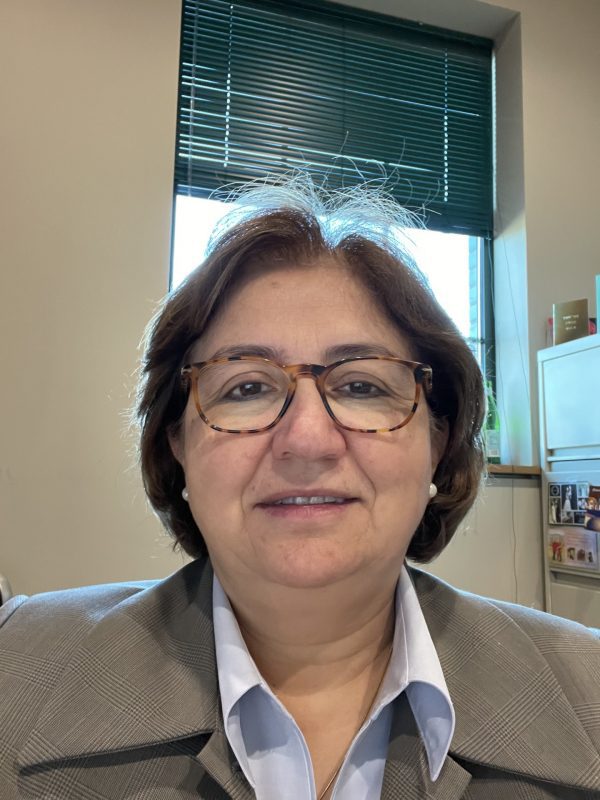
Fatma Selampinar, PhD

Professor in Residence, UConn Department of Chemistry

Dr. Fatma Selampinar is a Professor in Residence in the Department of Chemistry at the University of Connecticut, where she has taught since 2003. She also serves as the Early College Experience (ECE) Chemistry Coordinator. With over two decades of experience in chemical education and mentoring, Dr. Selampinar is deeply committed to making chemistry accessible, engaging, and equitable for all learners.
Dr. Selampinar earned her B.S. in Chemical Education and her M.S. and Ph.D. degrees in Chemistry from the Middle East Technical University in Turkey, specializing in polymer and physical chemistry. She came to the University of Florida with a fellowship from TÜBİTAK during her Ph.D. studies. She conducted her postdoctoral research at the University of Florida, studying electroactive polymers and their applications in controlled drug and biomolecule release.
At UConn, Dr. Selampinar also leads a range of outreach activities that allow high school students to experience college life and foster meaningful relationships between university faculty and high school teachers.
Dr. Selampinar is actively involved in expanding access to quantum science education. She co-organizes Molecular Quantum Days (MolQ Days)—an innovative outreach initiative supported by NASA’s Connecticut Space Grant Consortium—where high school students from across Connecticut visit UConn to explore quantum chemistry through lectures, demonstrations, and hands-on experiments. She also collaborates with faculty across departments to develop teacher workshops and learning modules that integrate quantum topics into the high school chemistry curriculum.

Dr. Fatma Selampinar