Marine Biology and Conservation

Conserving marine life and the environment of Long Island Sound - be a part of the solution

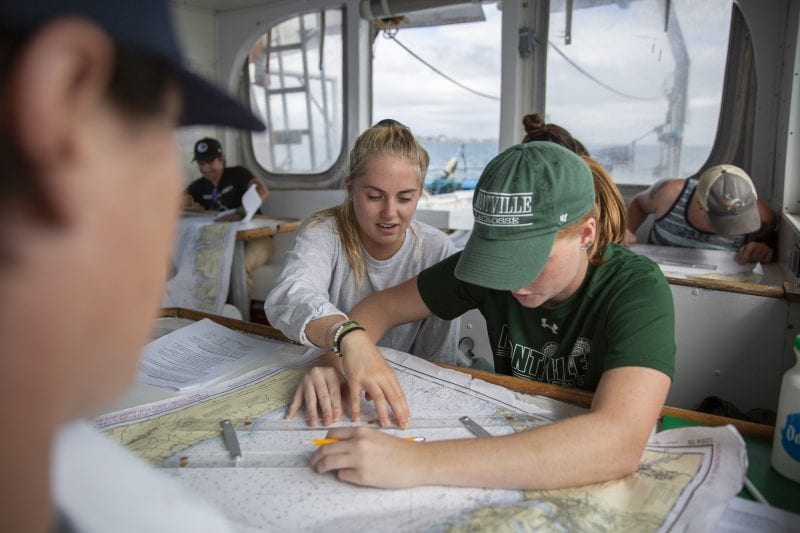
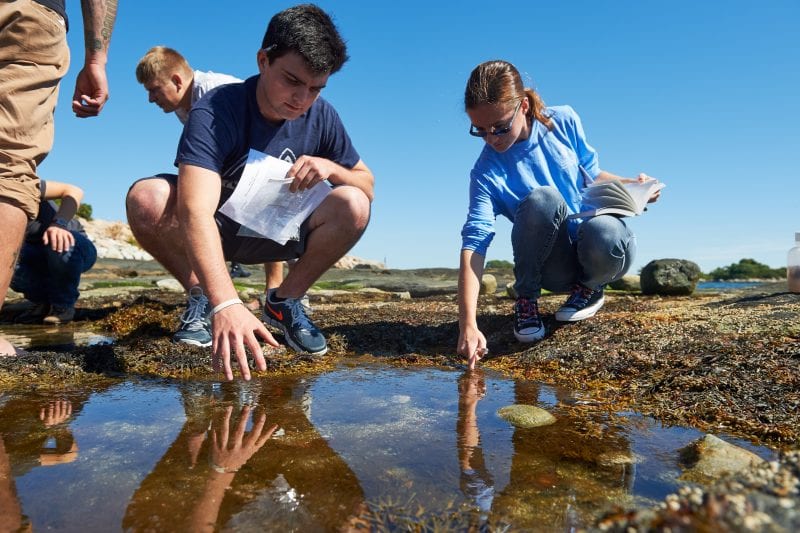
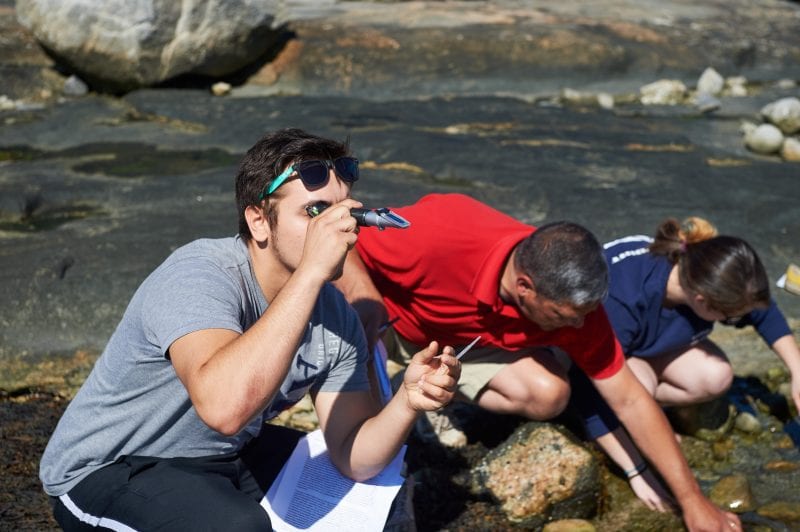
Prerequisites: Two years of High School Science and Math through Algebra II with a grade of C or higher ________________________________________________________________________________________________ Marine biologists study microbe, plant and animal physiology and ecology. While this research can be carried out on the scale of oceans much work is done in coastal waters, marshes, and laboratories. Understanding how marine organisms are adapted to their environment allows scientists and policy makers to make decisions about how to protect marine life and sustain ocean resources. To do this, marine scientists and marine biologists make observations and collect data on plant and animal diversity, ocean temperatures, currents, chemistry, and geology. This hands-on course will have you making these same observations in Long Island Sound (LIS), along the shore, in the laboratory and on the computer. Over the week you will study fish diversity in a nearby cove and marine invertebrate inhabitants of our rocky intertidal as well as seagrass and seaweed populations. You will conduct plankton tows and examine seawater properties. Dissections and laboratory experiments will inform you about the physiology and adaptations of local marine animals. We will collect data on the chemical and physical environment using instrumentation and sensors. By the end of the week, you will have learned and worked with many different types of equipment and instruments. You will conducted lab work and instrumental analysis. However, the key to being a good scientist is to be curious and ask good questions. You will use math, test hypothesis and apply reasoning to interpret your data and explain your observations. You can then begin to answer some of these questions and generate new ones. This is the foundation of marine ecology. We will be using this approach throughout the week. Finally, we will converge all our topics, data and observations to develop a better appreciation of the marine environment and create a sustainability plan for eastern LIS. This will also involve the critical thinking which we will have incorporated throughout the week as well as creativity. Our goals for you are:
  1. To appreciate how it is all connected - that the marine environment is influenced by our local watersheds, marshes and estuaries
  2. To understand that marine ecology is the interaction of marine organisms with each other and their physical and chemical environment
  3. To learn the ways that marine organisms must constantly adapt to their changing environment
  4. To experience how scientists are working to protect and conserve marine life
  5. To learn how to synthesize and present data to make informed decisions about conservation
  6. To always be curious and think critically
UConn PCS: Marine Biology

Sessions Offered

Storrs Session 1:

June 21, 2026  - June 27, 2026

Format

Residential, Non-Credit

This class is meant to be immersive and students will experience:

  • You will learn the properties of marine waters using instrumentation and laboratory experiments.
  • Small boat trips are used for observation of eel grass beds and seaweed distribution.
  • Fish seining and plankton tows will give you further information about biodiversity in eastern LIS.
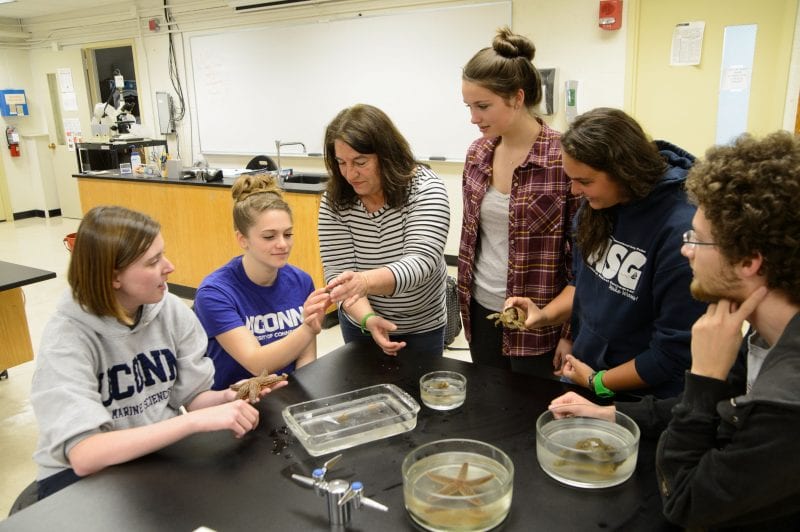
  • Dissections of fresh and preserved specimens will inform you about animal adaptations.
  • Influence of environmental parameters on animal physiology will be studied through laboratory experiments.
UConn PCS: Marine Biology

UConn PCS: Marine Biology

UConn PCS: Marine Biology

This course will include labs @ UConn Avery Point and the CT Shoreline


Meet the Professor


Claudia Koerting, Ph.D.

Program Coordinator & Professor, UConn Marine Sciences

Dr. Claudia Koerting has been a scientist, faculty member and academic advisor in the department of marine sciences for nearly twenty years and she has been teaching at UConn for nearly 30 years. Her research at UConn has included marine benthic ecology, detection and ecology of marine pathogens and analysis of toxin producing microalgae but she now focuses on water quality. She is the undergraduate program coordinator for Marine Sciences. Currently Dr. Koerting teaches several undergraduate courses and mentors undergraduate research projects. Her interests and research continue in the fields of marine chemistry and marine microbiology.
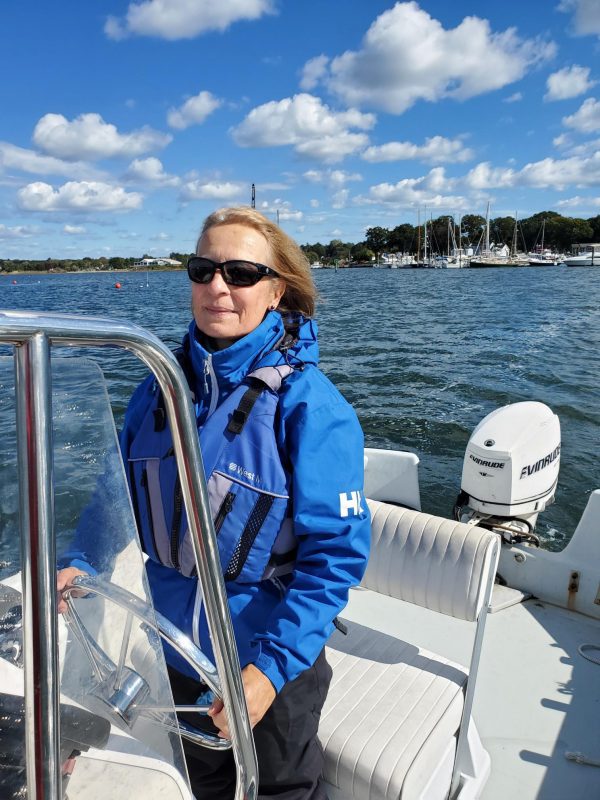
Professor Koerting